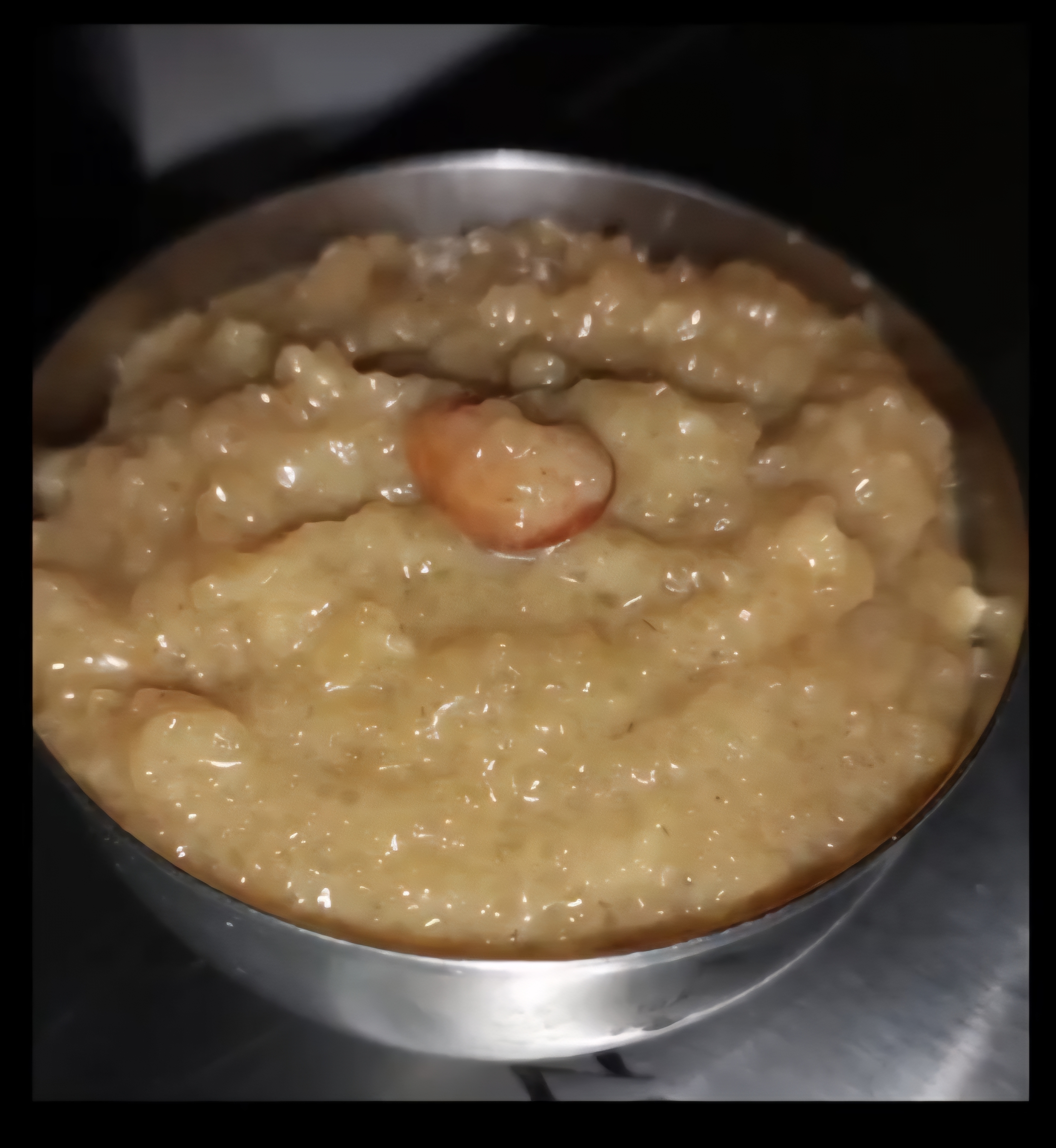
Godhuma Rava Akkaravadisal
Recipe
#Sweets
#Festival
#Traditional
Godhuma Rava Akkaravadisal | Wheat Semolina Sweet
A rich, traditional South Indian sweet perfect for festivals and special occasions.
Akkaravadisal is a beloved South Indian sweet traditionally made with rice, but this wheat rava (broken wheat/semolina) version is equally delicious and nutritious. The key is cooking the wheat semolina entirely in milk, giving it incredible richness and a unique taste that makes it truly special.
✨ Ingredients
- Godhuma rava (wheat semolina/broken wheat) – ½ cup
- Milk – 3 cups (or more as needed)
- Ghee – 3 to 4 tbsp
- Jaggery (powdered or small pieces) – ½ cup
- Cardamom powder – ½ tsp
- Cashew nuts – 4–5
- Pachha karpooram (edible camphor) – a pinch (optional)
👩🍳 Instructions
Preparing the Wheat Rava
- Choose finely ground wheat rava (similar to semolina); coarse rava is not suitable.
- Heat 1½ tbsp ghee in a heavy-bottomed pan over medium heat.
- Add wheat rava and roast well until a pleasant nutty aroma emerges.
Cooking in Milk
- Add 1 cup milk gradually to the roasted rava; mix well to avoid lumps.
- Cook on medium flame, stirring continuously until it begins to boil (~5 mins).
- Add more milk as needed (approx. 5–6 cups total) to keep cooking rava thoroughly soft.
- Continue cooking for 15–20 minutes until fully cooked and smooth.
Adding Sweetness and Flavor
- Add jaggery equal in quantity to the rava.
- Stir and let jaggery melt completely, stirring occasionally.
- Add 2 tbsp ghee and mix well.
- Cook on medium heat, stirring regularly.
- When mixture boils again, add cardamom powder and stir.
- Cook 2–3 more minutes, stirring continuously.
Preparing the Garnish
- Heat 1 tsp ghee in a small pan.
- Fry cashew nuts until golden red.
- Add fried cashews with ghee to the sweet and mix well.
- Cook 2–3 more minutes, then turn off heat.
- Optionally add a pinch of pachha karpooram and mix gently.
🍽️ Serving Suggestions
- Serve warm or at room temperature
- Perfect for Pongal, Diwali, and special occasions
- Can be offered as prasadam in temples
- Great dessert after traditional South Indian meals
💡 Tips for Perfect Results
- Use fine wheat rava for smooth texture
- Cook rava entirely in milk for richness
- Stir continuously to avoid lumps and burning
- Final consistency should be thick but pourable when hot
- Adjust jaggery to sweetness preference
Nutritional Benefits
- Wheat rava: Rich in fiber, protein, B vitamins
- Milk: Excellent calcium and protein source
- Jaggery: Contains iron and minerals unlike refined sugar
- Ghee: Healthy fats and enhances nutrient absorption
🌟 Variations
- Rice version: Use rice rava instead of wheat rava
- Nuts: Add almonds, pistachios, or raisins for variety
- Coconut: Add grated coconut for extra richness
- Saffron: Add strands for color and aroma
🛍️ Storage
- Store in refrigerator up to 3 days
- Reheat gently with a little milk if thickened
- Adjust consistency while reheating if needed
⚠️ Troubleshooting
- Lumpy texture: Stir continuously when adding milk
- Too thick: Add warm milk gradually
- Burning: Cook on medium heat and stir regularly
- Not sweet enough: Adjust jaggery quantity
Serves: 4–6 people
This wheat rava version is not only delicious but also more nutritious than the traditional rice version!
Video Tutorial
. Comments
Loading comments...

Categories